
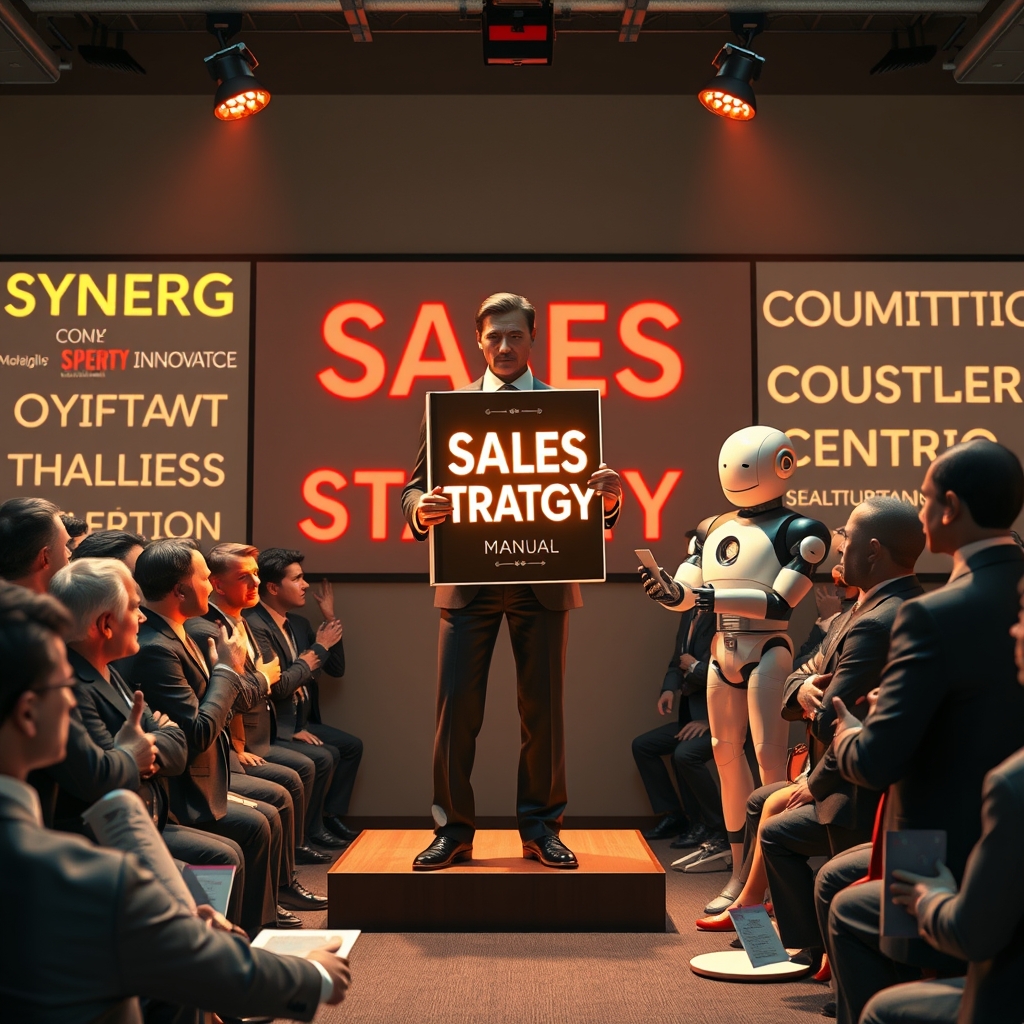
Ah, sales strategies—the magical realm where logic goes to die and buzzwords thrive like weeds in an abandoned garden. If you’ve ever sat through a corporate sales training session, you’ve probably heard phrases like “synergistic value proposition,” “disruptive innovation,” and “customer-centric engagement.” Translation: We’re going to baffle you with jargon until you either nod in agreement or slip into a coma. But fear not, dear reader, because today we’re dissecting the circus of sales strategies with the precision of a surgeon and the enthusiasm of someone who’s just been told their favorite show got canceled.
The Myth of the “Perfect” Sales Pitch
Let’s start with the grand illusion: the perfect sales pitch. You know the one—the 30-second spiel that’s supposed to make your prospect’s eyes light up like a kid on Christmas morning. In reality, the “perfect” pitch is about as real as a unicorn riding a Segway. Sales gurus will sell you scripts, frameworks, and templates, all promising to turn you into the next Jordan Belfort (minus the felony charges, hopefully). But here’s the kicker: the best salespeople don’t follow scripts. They adapt, improvise, and occasionally lie through their teeth—all while maintaining a smile so convincing it could win an Oscar.
Take the classic “AIDA” model: Attention, Interest, Desire, Action. Sounds simple, right? Wrong. It’s like saying the secret to baking a cake is “flour, sugar, eggs, bake.” Sure, those are the ingredients, but anyone who’s ever attempted to bake knows that the devil is in the details—and the details usually involve a smoke alarm and a fire extinguisher. The same goes for sales. You can have the fanciest framework in the world, but if you don’t understand your customer’s pain points, you’re just another telemarketer interrupting their dinner.
The Delusion of “Always Be Closing”
Ah, the infamous ABCs of sales: Always Be Closing. It’s the mantra that’s been drilled into salespeople since the dawn of time (or at least since the invention of the telephone). The idea is simple: never let a conversation end without asking for the sale. In theory, it’s a brilliant strategy. In practice, it’s about as subtle as a sledgehammer to the face.
Picture this: You’re at a networking event, sipping a drink that tastes like regret and tonic water, when some overzealous salesperson corners you. They launch into a monologue about their revolutionary product, their eyes gleaming with the fervor of a televangelist. Just as you’re about to make your escape, they hit you with the classic: “So, when can we get you started?” Congratulations, you’ve just been “ABC’d.” The only thing worse than this approach is the salesperson who thinks they’re being clever by disguising their close as a “question.” “Wouldn’t you agree that this is the solution you’ve been looking for?” Spoiler alert: No, I wouldn’t. I’d agree that you’re pushy, and I’d like to never see you again.
The truth is, “Always Be Closing” is a relic of a bygone era when customers were less informed and more easily manipulated. Today, buyers are savvier, more skeptical, and armed with more information than a CIA agent. If you try to close them too soon, they’ll run faster than a vegan at a barbecue. The modern salesperson’s mantra should be “Always Be Listening,” but that doesn’t have the same ring to it, does it?
The Rise of the “Consultative” Salesperson (Or: How to Pretend You Care)
Enter the consultative salesperson, the modern-day knight in shining armor who swears they’re not selling—they’re “helping.” It’s a beautiful concept: build a relationship, understand the customer’s needs, and then—oh so subtly—offer your product as the solution. It’s like therapy, but with a commission at the end.
The problem? Most consultative salespeople are about as genuine as a three-dollar bill. They’ll ask you about your business, nod sympathetically at your struggles, and then pivot to their product with the grace of a bull in a china shop. “I hear you’re struggling with X. Funny story—our product solves X! What a coincidence, right?” It’s the sales equivalent of a friend who only calls when they need a favor. Sure, they’re “building a relationship,” but we all know where this is headed.
Real consultative selling requires patience, empathy, and a willingness to walk away if the product isn’t the right fit. But let’s be honest: when was the last time a salesperson walked away from a deal because it wasn’t in the customer’s best interest? If you find one, buy them a drink. They’re rarer than a polite internet troll.
The Illusion of Data-Driven Sales
In the age of big data, sales strategies have become obsessed with metrics, analytics, and KPIs. We track everything: open rates, click-through rates, conversion rates, and—if we’re feeling particularly masochistic—”engagement scores.” It’s like trying to navigate a maze blindfolded while someone shouts directions at you in a language you don’t understand. Sure, data can be useful, but when did we start treating sales like a science experiment instead of a human interaction?
Sales leaders love to throw around phrases like “data-driven decision-making” and “predictive analytics,” as if a spreadsheet can replace actual human intuition. Newsflash: it can’t. You can have all the data in the world, but if you don’t know how to read the room, you’re still going to crash and burn. It’s like trying to seduce someone by reciting their dating profile back to them. Sure, you’ve done your research, but you’ve also missed the point entirely.
The best salespeople know how to balance data with instinct. They use metrics to guide their decisions, not dictate them. They understand that behind every lead, every click, and every conversion is a real person with real emotions, real fears, and—most importantly—real skepticism. And no amount of data can replace the ability to connect with that person on a human level.
The Future of Sales: AI, Chatbots, and the Death of Human Connection
If you thought sales strategies couldn’t get any more absurd, wait until you hear about the latest trend: AI-powered sales. That’s right, folks. We’ve officially entered the era where your next sales interaction might be with a chatbot named “Gary” who’s been programmed to sound like your best friend. Gary will ask about your day, remember your dog’s name, and then—just when you’re starting to feel a connection—hit you with a hard sell. It’s like falling in love with a toaster, only to realize it’s just trying to sell you bread.
Don’t get me wrong, AI has its place. It can handle routine tasks, qualify leads, and even draft emails that don’t sound like they were written by a sleep-deprived intern. But let’s not kid ourselves: no algorithm can replace the nuance of human interaction. A chatbot can’t read between the lines when a customer says, “We’re happy with our current solution.” A chatbot can’t sense the hesitation in someone’s voice or the unspoken objections lurking beneath the surface. And a chatbot certainly can’t build the kind of trust that turns a one-time buyer into a lifelong customer.
So where does that leave us? In a world where sales strategies are becoming increasingly automated, impersonal, and—let’s face it—lazy, the real competitive advantage isn’t a fancy CRM or a cutting-edge AI tool. It’s the ability to connect with people. To listen, to empathize, and to sell with integrity. But hey, what do I know? I’m just a sarcastic blogger with a keyboard and a bone to pick. Maybe I should ask Gary the chatbot for his opinion.
In the end, sales strategies are a lot like diets. Everyone’s got one, they all promise miraculous results, and most of them are just repackaged versions of the same old nonsense. The key isn’t to find the “perfect” strategy—it’s to find what works for you, your customers, and your sanity. And if all else fails, just remember: no one ever closed a deal by being boring. So go forth, sell with flair, and for the love of all that is holy, stop saying “synergy.”